
Stop Water Before It Damages Foundations
Drainage Install & Repair in Piney Flats for yards with standing water, erosion channels, or moisture against basement walls
Moffitt Grading and Land Management installs French drains, culverts, and surface grading systems that redirect water away from buildings and prevent pooling, erosion, and foundation damage. You need this service when heavy rain leaves standing water in your yard, runoff carves gullies through landscaping, or moisture seeps into crawl spaces and basements. Proper drainage protects your foundation, keeps grass from drowning, and stops soil from washing into driveways and storm drains.
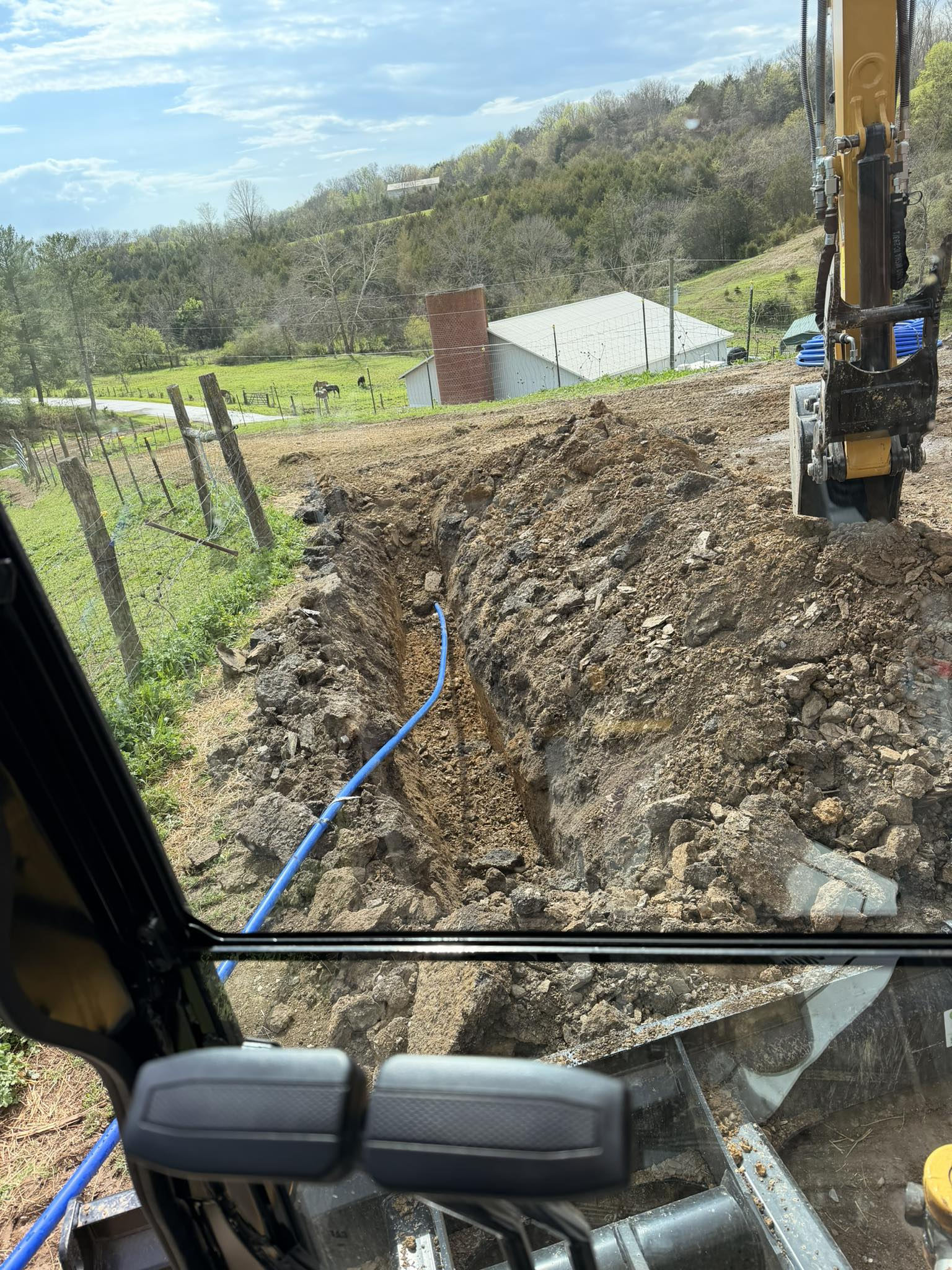
Sloped terrain and clay soils in Northeast Tennessee make drainage problems common. Water flows downhill but stalls when it hits flat areas or compacted ground, creating ponds that take days to dry. Installing a French drain involves digging a trench along the problem area, lining it with fabric, filling it with graded stone, and embedding a perforated pipe that carries water to a safe outlet. Surface grading reshapes the yard so water flows toward swales or culverts instead of collecting near the house.
Request a drainage assessment to identify where water enters your property and what system will move it away without creating new problems downstream.
How Drainage Systems Are Installed
The crew digs trenches to the depth and slope needed to maintain steady flow, usually one inch of drop per eight feet of run. Perforated pipe is laid holes-down so groundwater enters from below, and the trench is backfilled with washed stone that filters sediment while allowing water to pass. The pipe outlets into a daylight drain, dry well, or existing stormwater system depending on your lot layout.
Once the system is complete, you see water disappear from areas that used to stay soggy for days. Grass grows where mud used to dominate, and your foundation stays dry because runoff is intercepted before it reaches the walls. Moffitt Grading and Land Management integrates drainage work with grading and retaining wall projects so everything functions together without creating new erosion points.
The service does not include repair of existing foundation cracks, installation of sump pumps, or connection to municipal storm systems. If your drainage problem is caused by a broken sewer line or failed waterproofing, those issues are handled by plumbers or waterproofing contractors before grading and drain work begins.
What Homeowners Ask About Drainage Work
Drainage concerns in Piney Flats often involve understanding why water collects in certain spots and how different solutions compare in cost and longevity.
What is the difference between a French drain and a surface drain?
A French drain captures subsurface water through perforated pipe buried in gravel, while a surface drain uses open channels or grates to collect runoff from the ground surface.
How deep does a French drain need to be?
Most residential systems are dug twelve to eighteen inches deep, but depth varies based on the water table and where the outlet is located.
When should you install a culvert instead of a drain?
Culverts are used where water crosses driveways or paths, allowing flow to continue underneath without washing out the surface.
Why does drainage work require proper grading?
Grading ensures water flows toward the drain system instead of pooling or running in the wrong direction, which would bypass the solution entirely.
What happens if a French drain clogs over time?
Sediment or root intrusion can reduce flow, requiring excavation and cleaning of the pipe or replacement of the gravel filter layer.
Moffitt Grading and Land Management will walk your property after a rain to see where water collects and trace the path it follows across your lot. Contact them to schedule a site review and discuss which drainage solution fits your property and budget.